


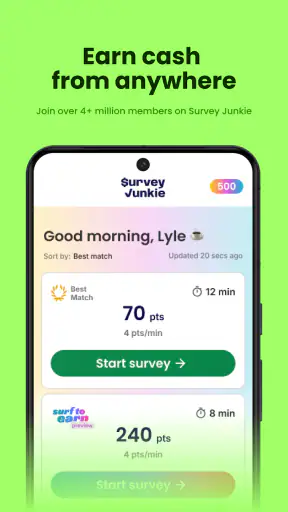
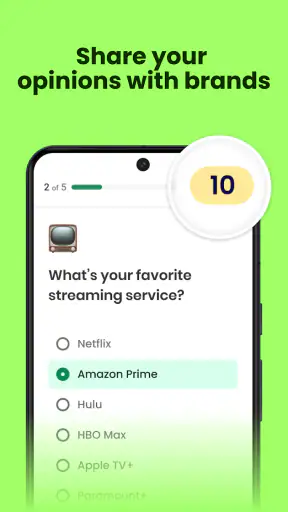
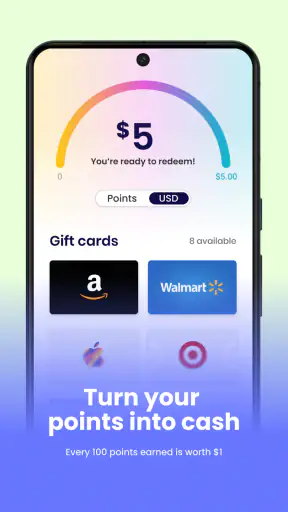



I look at Survey Junkie as a small, practical way to turn spare moments into rewards rather than as a serious income source. It is a free lifestyle app from Survey Junkie, built around answering surveys and sharing opinions in exchange for cash and rewards. I found the idea easy to understand: open the app, check what is available, answer questions honestly, and build up a balance over time.
That simplicity makes it interesting for people who already spend a few minutes waiting for a bus, sitting in a reception area, or relaxing at home. It also makes the app worth discussing in a household context, because a shared phone or tablet can blur the line between one person’s account activity and another person’s answers. My experience is that the app works best when each user treats their account as personal, keeps their activity separate, and understands that the reward is compensation for opinions, not payment for guaranteed work.
Using it during ordinary spare time
The most natural use case is not setting aside an entire afternoon. I would use it in short sessions: while waiting for an appointment, during a quiet coffee break, or when I have a few minutes before leaving the house. Surveys are easier to approach when I do not expect every visit to produce a large reward. That mindset matters because the value comes from consistently checking in and completing suitable questionnaires, not from assuming every tap leads directly to cash.
For example, imagine a household where one person commutes and keeps the app on a personal phone. Instead of scrolling through social media while waiting for a train, they can check whether a survey matches their profile and attention span. Another person in the same home might use the app occasionally on a tablet. The sensible arrangement is for each person to use their own account and make their own choices, rather than passing one login around and mixing answers.
I also like the fact that the concept is more focused than many reward apps that combine surveys with shopping offers, games, advertisements, and unrelated tasks. Here, the central activity is giving opinions. That narrower purpose can feel less distracting, especially if I want a straightforward survey experience rather than a large rewards hub filled with competing promotions.
At the same time, I would not describe the app as a dependable replacement for paid employment. Survey availability can vary, and answering questions takes time. Some people will find the exchange worthwhile for occasional extras; others will decide that the time is better spent on a different activity. The right question is not whether it makes someone rich, but whether the available surveys are convenient enough to justify the attention they require.
What the first session feels like
When I approach a survey app, I want to know quickly what I am being asked to do and why certain questions appear. Survey Junkie’s basic purpose is clear from the start: my opinions are the activity, and rewards are the reason to complete it. I would still read each screen carefully instead of rushing through, because inconsistent or careless answers can make the experience frustrating and reduce the usefulness of the responses.
A useful habit is to treat the opening questions as part of the survey rather than as an annoying obstacle. They help determine whether a particular questionnaire is relevant to me. If I answer them with random choices simply to reach the main section, I may waste more time later or create answers that do not accurately represent my household, habits, or preferences.
I recommend deciding in advance how much time a session deserves. If I am only waiting for a short appointment, I would choose a survey that appears manageable and stop when I need to leave. If I have more time, I can review the available options more calmly. This prevents the common mistake of starting something lengthy when I cannot finish it without interruption.
Keeping accounts and devices separate
The shared-device question deserves more attention than it usually receives. A family might keep one tablet in the kitchen, or partners might occasionally use the same phone. That does not mean one account should represent everyone. Survey answers are personal opinions, so combining responses from different people can make the account history confusing and may undermine the purpose of the surveys.
My recommendation is simple: one person should use one account, and that person should answer from their own experiences. If a household shares a device, the users should agree on a clear handoff routine. Sign out when appropriate, avoid entering another person’s survey halfway through, and do not let a child tap through questions just because the device is available. These are practical boundaries, not complicated technical settings.
I would also avoid using a shared account as a household points jar. That sounds convenient, but it creates several problems. Whose opinions are being recorded? Who decides which demographic details are accurate? Who should receive the reward? Even when everyone has good intentions, those questions become awkward quickly. A personal account keeps responsibility and expectations clearer.
This is especially important when a household member changes devices. Moving from a phone to a tablet can feel like a harmless switch, but I would first make sure I am still using my own account and not another person’s session. The goal is to prevent accidental mixing, not to create a formal family-management system that the app was never designed to provide.
Coordinating without turning it into a chore
Household coordination should stay light. I would not recommend comparing every survey or pressuring another person to complete questionnaires on a schedule. The app is more comfortable when each user can decide independently whether a survey fits their interests and available time.
A brief conversation can prevent most misunderstandings. Everyone can agree that accounts are personal, devices should be handed over cleanly, and rewards belong to the person whose opinions generated them. That is enough structure for most homes. If a family wants to save toward a shared goal, they can make their own arrangement outside the app rather than pretending that several people’s answers are one person’s profile.
There is also a useful privacy habit here: avoid discussing another person’s answers in front of the household as if they were group information. Survey topics can touch on shopping, media, finances, health, or personal preferences. Even when the questions seem ordinary, each user should be able to decide what they are comfortable answering. I see this as one of the main differences between using the app alone and using it on a shared device.
For couples or roommates, the practical trade-off is convenience versus clarity. A single tablet in a common room is convenient, but a personal phone is easier for keeping sessions distinct. If the household only has one device, a simple sign-out and sign-in routine is more valuable than trying to create a complicated schedule.
Age, trust, and responsible participation
The app carries an Everyone content rating, which makes it appear broadly suitable from a content perspective. That should not be confused with assuming that every person in a household will understand account responsibility in the same way. Younger users may need an adult to explain that surveys are not games, that answers should be truthful, and that personal questions deserve careful consideration.
I would be particularly cautious about letting a child use an adult’s account. Even if the child is only curious, their answers would no longer represent the account holder. A better approach is to keep the account with the person who created it and decide together whether the child should participate at all. Adults can also explain that no reward is worth sharing information impulsively or clicking through without reading.
Trust matters for adults too. If someone in the home asks to borrow the device, I would not leave a survey open on a sensitive question. Closing the session before handing over the phone is a small but worthwhile habit. It protects the account from accidental answers and gives the other person a clear boundary around personal activity.
People who are uncomfortable with opinion surveys should skip the app, even if the rewards sound appealing. The central exchange requires time and personal responses. Someone looking for anonymous entertainment, a fixed hourly rate, or a way to avoid answering demographic questions will probably be happier with another kind of app. Survey Junkie is a better match for users who accept that their opinions are the product being requested.
How it compares with other ways to earn small rewards
Compared with cashback services, Survey Junkie does not depend on buying something first. That is a meaningful advantage for me because cashback only helps when I already plan to shop. Here, the activity is answering surveys, so the app can fit people who want to participate without making a purchase. The trade-off is that cashback may feel more effortless when a planned transaction already qualifies.
Compared with microtask platforms, this app is more focused but potentially less varied. A microtask service might offer image checks, short research tasks, or other forms of online work. That variety can help when surveys are not appealing, while Survey Junkie’s narrower format is easier to understand. I would choose the latter when I specifically want opinion-based tasks, not a menu of unrelated assignments.
Compared with loyalty programs, the app also changes the effort involved. Loyalty programs often reward shopping habits I already have, whereas this one asks me to spend time answering questions. That makes the decision more personal: if I dislike surveys, a store loyalty scheme may be a better fit; if I enjoy sharing preferences and have idle time, the survey model may feel more direct.
The important comparison is time, not just the headline reward. I would judge each session by whether the questions hold my attention and whether the eventual benefit feels fair for that time. Someone with a strict schedule may prefer a service with predictable tasks. Someone who wants flexible, occasional participation may appreciate being able to check the app only when convenient.
Practical habits that improve the experience
My first tip is to answer consistently, not strategically. It can be tempting to choose what seems likely to qualify for more surveys, but that creates a messy account and makes the questions harder to answer honestly later. I would use real details about my own life and accept that not every survey will be a match.
My second tip is to protect concentration. I would not start a survey while cooking, supervising a child, or doing anything that makes it easy to misread a question. A rushed response is frustrating for me and less useful for the survey itself. A quiet few minutes usually produces a better experience than trying to multitask.
Third, I would keep expectations modest and track the time mentally. Not every session needs to be profitable in the way a job is profitable, but I should still notice whether I am enjoying the process. If I repeatedly leave the app feeling that the effort is not worthwhile, that is a clear sign to reduce usage or choose a different rewards category.
Fourth, I would treat the balance as personal rather than household money unless everyone has explicitly agreed on another arrangement. This avoids arguments when one person completes the work and another person assumes the reward belongs to everyone. Clear ownership is particularly important on a shared tablet.
Finally, I would keep the app updated through the normal app-store process. The current version is 1.32.3-na, and the app supports devices running Android 9 or later. That makes checking compatibility worthwhile before installing it on an older phone. On a household device, I would also confirm that the operating system is supported before promising that everyone can use it there.
Who should use it, and who should pass
I think Survey Junkie suits adults who want a simple opinion-based rewards app and can use it in short, flexible sessions. It is also a reasonable choice for a household that can keep accounts separate and communicate clearly about shared devices. The free price removes the need to commit money before trying the experience, which is helpful for cautious users.
I would skip it if I need guaranteed earnings, a fixed schedule, or a predictable return for every minute. I would also look elsewhere if I prefer shopping rewards, games, or a wider range of microtasks. The app’s focus is its strength, but that same focus limits its usefulness for someone who wants variety.
The public response is encouraging: it holds a 4.4 average from around 108 thousand ratings, and it has passed the one-million-install mark. Those figures suggest that many people find the concept worthwhile, but they do not remove the need to judge the app against personal expectations. A popular survey app can still be a poor fit for someone who dislikes questionnaires or has almost no spare time.
My household verdict
After looking at the app through a shared-device lens, I see it as a sensible optional tool rather than a family activity. I would recommend installing it for the individual who actually wants to answer surveys, not for a household that expects one account to collect everyone’s opinions. Keeping identities, sessions, and rewards separate makes the experience much cleaner.
The developer, Survey Junkie, has kept the central idea easy to grasp: exchange personal opinions for cash and rewards. That clarity is more useful than a crowded feature list, especially when I only want something to do during spare minutes. Still, the app asks for attention and honest participation, so the reward should be viewed as a small extra rather than a promise of dependable income.
My final recommendation is conditional but positive. If you have a supported device, enjoy sharing your views, and can set realistic expectations, the free app is worth trying. Use your own account, read questions carefully, protect personal boundaries, and stop if the time no longer feels worthwhile. For a household, the best result comes from treating it as several individual experiences on a shared device, never as one blended family profile.


